When a Bently Nevada 3500 module fails on a live machine train, you are not just replacing a card. You are protecting turbine shafts, generator rotors, and ultimately the entire power supply backbone that feeds your UPS, inverters, and critical loads. In that moment, the phrase “in stock” stops being a marketing tagline and turns into a reliability decision: can you get a proven 3500 module on the shelf, configured, and back in service before the next start or restart window?
Drawing on field experience with machinery protection and power reliability, and on published information from Bently Nevada’s owner Baker Hughes and specialist distributors, this article explains what “Bently Nevada 3500 module in stock” really means, where to look, and how to check availability without compromising protection integrity.
Where the 3500 System Fits in a Power Reliability Strategy
The Bently Nevada 3500 is a rack-based, modular machinery protection and condition monitoring system. It is designed for continuous, real-time monitoring of critical rotating assets such as steam and gas turbines, compressors, generators, and large motors. These are exactly the machines that anchor industrial and commercial power systems and feed downstream UPS and inverter systems.
In a typical plant or data center campus, a 3500 rack sits close to each major machine train. It acquires vibration, shaft position, speed, temperature, and selected process variables from proximity probes, accelerometers, RTDs, and other transducers. It then drives hardwired relay outputs for alarms and trips, and streams rich dynamic data to software such as Bently Nevada’s System 1 for diagnostics.
From a power-system point of view, the 3500 is the layer that prevents mechanical damage and nuisance trips on the prime mover. If a monitor, tachometer, or relay module is unavailable when you need it, you may be forced to delay a return to service, run with reduced protection, or shift more risk onto UPS and backup systems. That is why an honest “in stock” check on 3500 modules is operationally critical.
The Bently Nevada 3500 in a Nutshell
Bently Nevada’s 3500 platform has been in service for decades and is one of the most widely deployed machinery protection systems in the world. A recent Baker Hughes statement on the 3500 monitoring system makes several important points that directly affect your sourcing strategy.
First, the 3500 is not obsolete and there is no forced obsolescence program. Baker Hughes positions its newer Orbit 60 platform as the preferred choice for many new installations after 2020, but explicitly states that the 3500 product line remains fully supported and fit for service. With more than about 80,000 systems installed worldwide and roughly 5,000 new systems still being added annually, 3500 is an active, mainstream platform rather than an end-of-life legacy product.
Second, the 3500 embodies more than 60 years of Bently Nevada domain knowledge and best practices in machinery protection. It uses a 19‑inch rack to house redundant power supplies, communication interfaces, and a mix of four-channel monitor cards that handle proximity, seismic, speed, and temperature measurements. The platform is designed to meet API 670 requirements, with options such as redundant power, triple-modular-redundant configurations for selected modules, and extensive hazardous-area approvals.
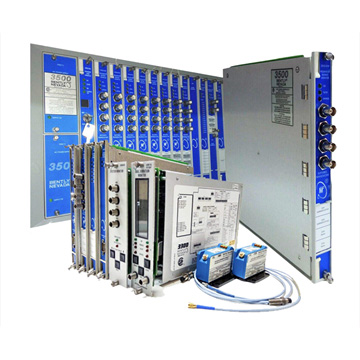
Third, Baker Hughes invested several million dollars in 2016 and 2017 to refresh all 3500 electronics, circuit boards, and layouts to meet RoHS lead-free requirements. The well-known green boards were replaced with blue boards and are manufactured, tested, and assembled in Minden, Nevada on advanced, largely automated PCBA lines. That means the “current” 3500 modules you see listed as in stock through reputable channels are not just old stock; they are the outcome of an actively maintained hardware platform with managed component lifecycles.
In practical terms, all of this means that genuine, newly manufactured 3500 modules exist alongside repaired or surplus units in the supply chain. Understanding which you are buying, and from whom, is the first step in any immediate availability check.
Common 3500 Modules You May Be Sourcing
Before you call anyone about stock, you need to know exactly which module you are looking for and what role it plays in the rack. The 3500 family covers a range of specialized cards; several of them show up repeatedly in power generation and heavy industrial applications.
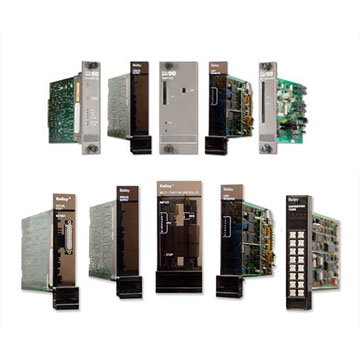
The proximitor and seismic monitor modules include hardware such as the 3500/40 and 3500/42 families. The 3500/40 Proximitor Monitor and the related 40M variant accept inputs from Bently Nevada proximity probes and selected seismic sensors to measure radial vibration, thrust position, differential expansion, eccentricity, and related parameters. The 3500/42 Proximitor/Seismic Monitor is a four-channel card that can be configured for radial vibration, thrust position, differential expansion, eccentricity, acceleration, velocity, shaft absolute, and circular acceptance region measurements. Both module types support alert and danger alarm levels, band-pass filtering, buffered outputs, and configuration via 3500 rack software.
For specialized machines, dedicated monitors are used. The 3500/44M Aeroderivative Gas Turbine Monitor is optimized for aeroderivative gas turbines and processes signals from Velomitor and accelerometer sensors, with 1X tracking and band-pass vibration aligned to turbine OEM requirements. The 3500/46M Hydro Monitor is tailored to hydro turbine generators and covers hydro radial vibration, hydro air gap, hydro velocity, hydro acceleration, hydro thrust, hydro stator end winding vibration, and dynamic pressure. It uses discrete inputs to distinguish operating modes, such as rough load zones, and applies mode-based alarm strategies.
Speed and overspeed protection responsibilities usually fall to the 3500/50 Tachometer Module. This two-channel module accepts signals from proximity probes or magnetic pickups and monitors shaft speed, rotor acceleration, and direction of rotation. It compares these measurements to user-programmed setpoints, supports zero-speed and reverse-rotation detection, and updates outputs approximately every 100 milliseconds. Its 4 to 20 milliamps recorder outputs, with fine resolution, make integration with plant control and trending tools straightforward.
For relays and shutdown logic, facilities commonly rely on the 3500/33 16-Channel Relay Module. This full-height module provides 16 individually programmable SPDT relay outputs with an integrated arc suppressor rated at 250 Vrms. Each channel can be driven by sophisticated AND/OR alarm logic based on alert and danger statuses, Not-OK conditions, and measured variables from one or multiple monitor channels. Front-panel LEDs provide OK, communication activity, and channel alarm indications. Contacts are epoxy-sealed, with a designed life of about 10,000 operations, and channels are grouped into four sets of four with configurable normally energized or normally de-energized behavior.
Data gateways and communication modules include the 3500/22M Transient Data Interface, which moves high-resolution vibration and process data to analysis platforms. Sources focused on maintaining the 22M emphasize regular inspections for contamination and mechanical issues, verification of configuration and transducer mappings, firmware and driver updates, network health checks, and periodic validation of alarm and trip logic.
Even display hardware appears in the supply chain. A 3500/94 VGA Display Module is an example of a front-end display card available through general marketplaces, often sold with defined return policies rather than integrated engineering support.
Different plants standardize on different subsets of these modules. The more precisely you describe the module type, part number, and revision you need, the better your chances of getting a truly compatible unit that is actually sitting on a shelf.
What “In Stock” Really Means for 3500 Modules
The phrase “in stock” is used loosely across the 3500 marketplace and can mean markedly different things depending on the seller.
From the original equipment manufacturer’s perspective, “in stock” usually means physically available in their distribution system or in an authorized channel’s warehouse, ready to ship against a standard lead time. Baker Hughes has made it clear that the 3500 remains a supported product line, and they have invested in long-term component lifecycle management and firmware documentation. For many plants, this OEM route is the baseline for safety-critical modules because it provides current RoHS-compliant hardware and known compatibility with the latest configuration software.
Specialist distributors and integrators occupy another important tier. Companies that focus on Bently Nevada systems, including training firms and automation vendors, often maintain their own inventories of common 3500 monitors, relay cards, and power supplies. They use these for project deliveries, replacements, and field service. When such a company marks a module as “in stock,” it typically signifies that the part is either on the shelf or part of an established supply program. These organizations also understand 3500 configuration templates, alarm philosophies, and integration with control systems, which makes them valuable when you need both hardware and technical assurance.
There is also a vibrant secondary market for 3500 modules. Vendors such as industrial surplus suppliers and online marketplaces list modules ranging from proximitor monitors to display units. For example, a 3500/94 display module may be offered with a 60‑day return policy where the buyer pays return shipping. Another vendor may advertise a 3500/40 Proximitor Monitor as available and ready to ship, complete with environmental specifications and intrinsic safety barrier options. In these cases, “in stock” usually signals that the seller has at least one physical unit on hand, but it does not guarantee anything about firmware revision, prior history, or whether the module has been fully tested under realistic conditions.
From a reliability perspective, what matters is not just whether a module exists somewhere in the supply chain, but whether you can have a suitable, proven unit in your hands quickly enough, with enough confidence to put it between your machine and your trip relays.

A Practical Workflow for Immediate Availability Checks
When I help a plant team navigate an urgent 3500 module replacement, I think in terms of a single workflow that protects both time and risk.
The first task is to clarify exactly what has failed and what you need to replace. Use the 3500 rack configuration and the operating manual to identify the module type, channel use, and any special options such as triple modular redundancy or intrinsic safety barriers. Take a clear photo of the front and side labels and capture the part number, revision, and any option codes.
Once you know the target, engage your OEM or primary Bently Nevada channel. Because Baker Hughes still manufactures and supports the 3500, they are the authoritative source on current lead times and on whether a module is still in its current blue-board form or transitioning between revisions. Ask explicitly whether the part number and revision you are requesting is on the shelf, in regional stock, or only available on a build-to-order basis. If a standard lead time does not meet your risk tolerance, ask if they or a partner can pull a module from project or training stock to cover a critical outage.
In parallel, contact one or two specialist 3500 distributors who advertise stock on similar modules. Discuss more than price: ask how many units they have physically in their warehouse, whether they are new, repaired, or surplus, and what testing regime they apply before shipment. For a module such as a 3500/33 relay card or 3500/50 tachometer, request test documentation or at least confirmation that functions such as relay actuation, 4 to 20 milliamps outputs, and OK indications have been verified under load.
If you decide to pursue secondary-market suppliers, treat their “in stock” claim as the start of a due diligence process rather than the end. Evaluate their return policy and be clear about who pays shipping on returns, as seen in typical marketplace policies where the buyer pays return freight and any label cost is deducted from the refund. Check that the seller understands 3500 modules well enough to answer basic questions about firmware and compatibility, not just shipping and payment.
Throughout these conversations, maintain alignment with your internal procurement rules. In some organizations, you must collect three quotations for any significant purchase, even if you intend to stay with Bently Nevada equipment because of past performance. A control engineering forum discussion captured this reality: the engineer wanted to stay with Bently Nevada due to its successful track record across multiple plants, but still needed competitive quotes to satisfy internal policy. For immediate availability on 3500 modules, this often means combining OEM, specialist distributor, and secondary-market quotes while still ranking them according to reliability risk.
Comparing Sourcing Paths: Cost, Time, and Risk
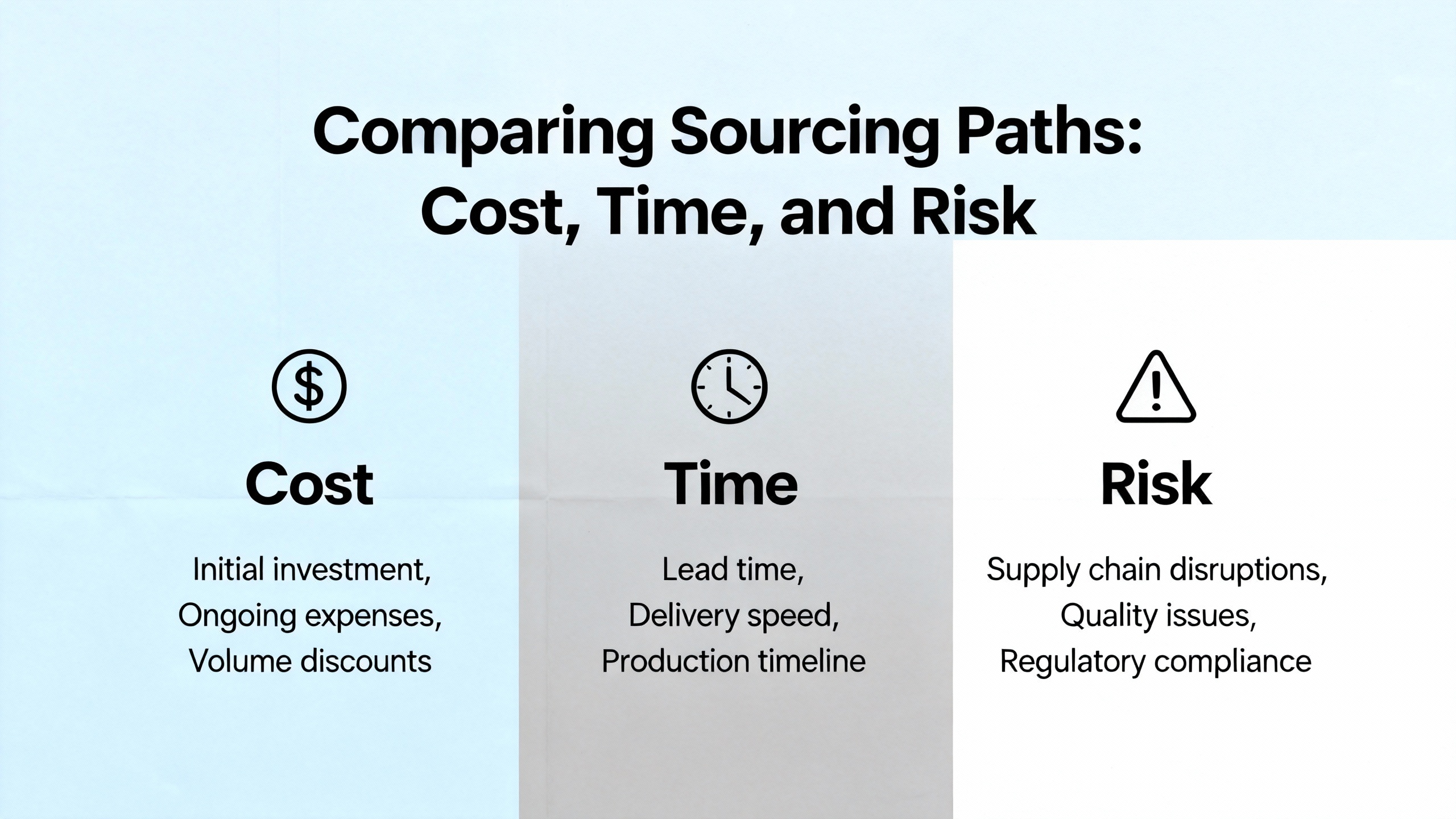
Different sourcing paths for 3500 modules involve different trade-offs between availability, price, and risk to your machinery protection envelope. While every site has its own constraints, several patterns show up consistently in practice.
Purchasing directly through Baker Hughes or an authorized Bently Nevada channel usually offers the highest assurance of hardware pedigree and software compatibility. You benefit from the manufacturer’s RoHS-compliant blue-board hardware, formal lifecycle management for components, and the latest configuration tools. For critical modules responsible for trips on large turbines or main feeders, this path tends to be favored when time allows, even if the unit cost is higher, because you are buying into a fully engineered protection ecosystem.
Working with specialist distributors can shorten lead times and give you access to application expertise, particularly if your installation includes complex rack configurations. A supplementary maintenance manual from a major turbine-pack provider, for example, describes more than a dozen specific 3500 rack layouts for different pack types and water-injection schemes, each with its own configuration templates. Distributors who understand these templates can do more than ship a module; they can help you ensure that a replacement 3500/42 monitor or 3500/33 relay module is programmed exactly as the original, with the appropriate voting logic, alarm setpoints, and communication mappings.
Secondary-market suppliers and general online marketplaces are usually the fastest route to a physical module at the lowest apparent price. They are also where risk tends to be highest. Units may come from dismantled plants, unknown environments, or incomplete test regimes. In some cases, the seller’s core expertise is logistics rather than machinery protection. A display module with a generous return policy is one thing; a proximitor monitor with unverified calibrations that sits between your rotor and your trip relays is another. If you rely on this path, mitigate the risk by ordering early, bench-testing the module on a spare rack, and planning a fall-back option in case it does not behave as expected.
Reliability and Configuration Risks When Swapping 3500 Modules
Swapping a 3500 module is not the same as swapping a generic I/O card. The system is designed to satisfy API 670 machinery protection requirements, and its modules, alarms, and wiring are part of a safety-related chain. Several technical and procedural risks deserve attention whenever you install a “replacement in stock” module.
One major risk lies in alarm and trip logic. The 3500/42 proximitor and seismic monitors, for example, support alert and danger levels, OK and bypass states, and speed-dependent alarm logic. The 3500/33 relay module can combine alert, danger, and Not-OK conditions using AND and OR logic to drive up to 16 relays, each serving different trip or interlock functions. The user manuals recommend using appropriate voting schemes, such as two-out-of-three logic on redundant channels, and relying on system relay modules for shutdown, not on monitors alone. If you install a replacement module and then manually recreate configuration from memory or partial screenshots, it is easy to miss a filter setting, a time delay, or a latching behavior that was part of the original safety case.
Another risk concerns data continuity and diagnostic value. The 3500/22M TDI is a transient data gateway that feeds vibration and process data to higher-level analysis and historian systems. Articles focused on maintaining this module emphasize the need to check historian data quality, network diagnostics, and configuration drift regularly. If you replace a 22M without verifying communication drivers, firmware versions, and IP configuration, you might restore basic rack protection but lose the trend data that your reliability program depends on to prevent future failures.
Sensor integrity is a third area where module replacement and troubleshooting intersect. A case study on 3500 maintenance describes months-long drift in the bias voltage of a proximity probe that caused false turbine trips. Only when bias voltage was checked systematically as part of quarterly validation did the failing probe get identified and replaced. If you respond to such symptoms by swapping monitor modules without checking transducers, wiring, and grounding, you risk blaming the wrong component and eroding confidence in the system.
For these reasons, a disciplined swap process for 3500 modules should include pre- and post-replacement configuration backups, end-to-end functional tests of alarms and trips, and explicit verification of sensor health and wiring. Treat the module swap as a maintenance intervention on a safety system rather than a simple hardware change.
Building Your Own “In Stock” Strategy
Relying purely on the external market for immediate availability puts you at the mercy of other people’s inventory. A more robust approach is to design your own internal “in stock” strategy for 3500 modules based on the criticality of your assets, the diversity of your rack configurations, and your tolerance for outage risk.
Start by mapping your installed 3500 base in practical terms. For each unit, note the rack configuration, module types, and any special features such as triple modular redundancy, hydro-specific monitors, or aeroderivative gas turbine cards. Supplemental configuration guides show that even a single turbine technology family can have numerous distinct 3500 rack templates depending on water injection, termination schemes, and drive type. That diversity matters because a spare 3500/42 card may not be a universal drop-in if firmware, options, or signal assignments differ.
Next, identify a minimal set of spare modules that would allow you to recover from the most probable failures without external dependence. In many fleets, this core set includes at least one spare for each common monitor type, one relay module capable of covering the most critical trip logic, a spare tachometer module if overspeed protection depends heavily on a 3500/50, a spare 22M for plants that rely heavily on transient data, and a spare power supply. You may also want at least one spare rack interface or TDI module, depending on your architecture.
Then, align this internal stock with your sourcing channels. For modules you deem too critical to leave to chance, source primary spares directly from Baker Hughes or trusted partners so that you get current hardware and documented history. For secondary or less critical spares, you might accept reconditioned modules from specialist distributors, provided they have been tested thoroughly and are compatible with your configuration software.
Training plays an important role in making all of this work. A multi-day, workshop-intensive course on the 3500 monitoring system, such as the ones offered by specialist training providers, gives your team hands-on experience in configuring modules, integrating with plant systems, and troubleshooting faults. When your engineers understand how monitor modules, relay logic, and communication gateways interact, they are better equipped to evaluate “in stock” offers, ask the right questions, and commission replacements correctly.
Finally, connect your spare strategy to your preventive maintenance program. Routine visual inspections, cleaning, calibration, and firmware management on live racks reduce unexpected module failures. Structured troubleshooting guidance for issues such as power supply faults, network problems, sensor failures, and ground loops helps you distinguish between genuine module defects and issues elsewhere in the protection chain. By reducing emergency replacements, you make your “in stock” spares go further and buy time for deliberate procurement rather than crisis buying.
Frequently Asked Questions on 3500 Module Availability
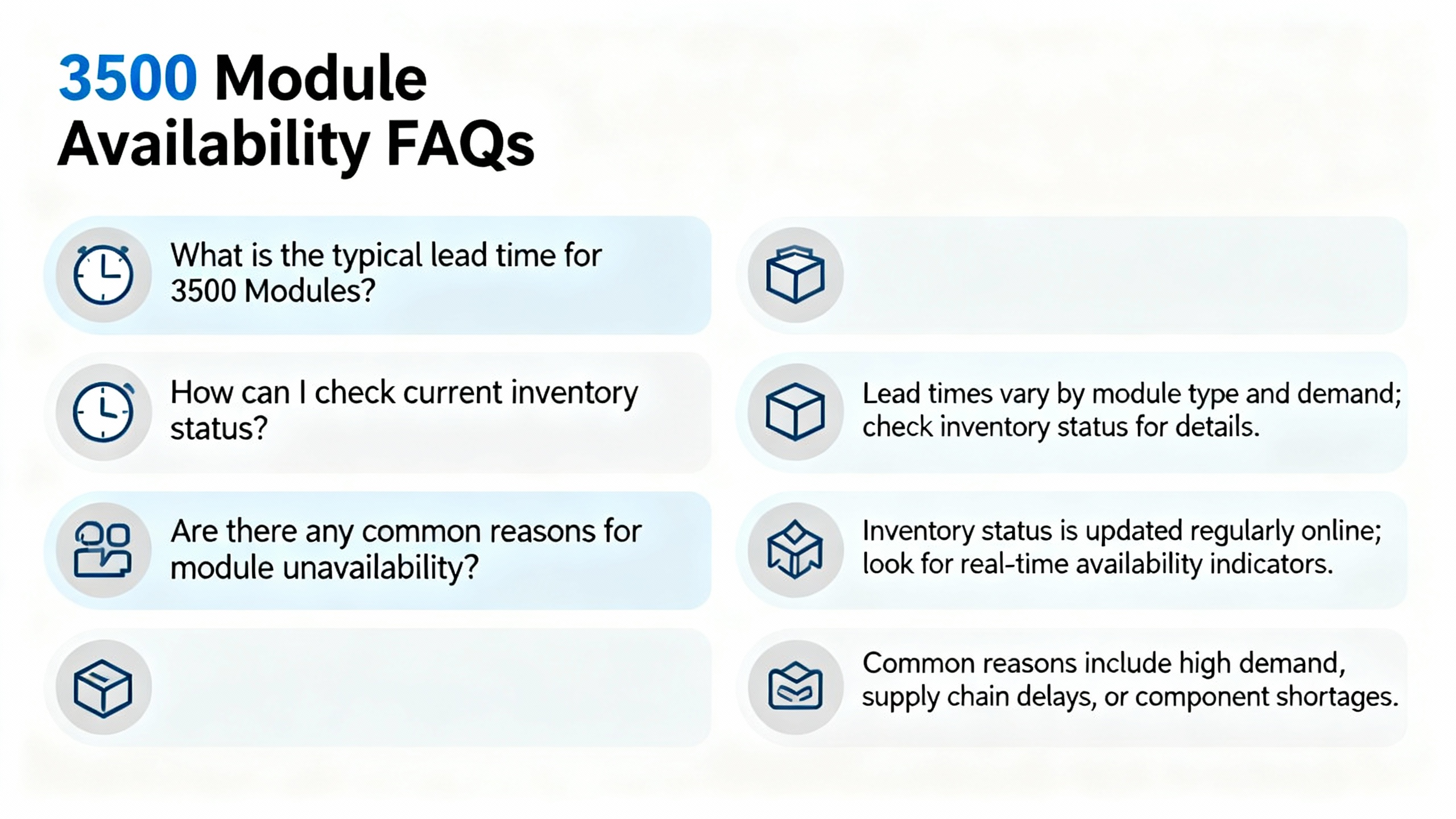
Is the Bently Nevada 3500 system obsolete, and should I avoid stocking new modules? Baker Hughes has been clear that the 3500 Machinery Monitoring System is not obsolete. While the newer Orbit 60 platform is recommended for many new installations due to improved functionality and integration, the 3500 product line remains fully supported. With tens of thousands of systems in service and new units still being shipped every year, there is a strong justification for maintaining a strategic stock of key 3500 modules on sites that rely on them.
Is it safe to buy 3500 modules from general industrial marketplaces? General marketplaces can be a useful source for non-critical items such as display modules or for short-term stopgaps, particularly when sellers offer defined return periods. However, for monitors and relay modules that directly influence trip logic, the risks associated with unknown history, limited testing, and uncertain firmware can be significant. If you choose this path, treat the purchase as provisional, bench-test thoroughly on a spare rack, and make sure you can return the hardware if it does not perform as required.
How many spare 3500 modules should I keep on site? There is no single number that fits all plants. A facility with a handful of medium-critical motors will make different decisions than a site whose main gas turbines feed an entire campus or grid segment. A practical approach is to identify which machines and modules would, if lost, materially affect your power reliability or safety, then ensure at least one fully compatible spare for each of those module types is available on site or in a dedicated regional stock. As your installed base and risk profile evolve, review and adjust this strategy periodically.
If I replace a failed module with a newer blue-board version, will my configuration still work? The move from green to blue boards was driven primarily by RoHS and manufacturing improvements, not by a desire to change functionality in the field. That said, it is essential to verify firmware compatibility, hazardous area approvals, and configuration software versions when mixing module revisions. Use the OEM’s documentation and your trusted channel’s guidance to confirm compatibility, back up the existing configuration, apply the replacement, and perform full functional tests on alarms, trips, and data outputs.
In the end, an “in stock” 3500 module is only truly valuable when it is the right module, sourced from an appropriate channel, installed with a clear understanding of its role in your machinery protection design, and supported by disciplined configuration and maintenance. Treat the availability check as part of your overall reliability strategy, not just a purchasing exercise, and your power system will be far better prepared for the next unplanned call.
References
- https://do-server1.sfs.uwm.edu/find/230B0K4848/pub/217B2K1/bently_nevada_3500__42m__manual.pdf
- https://studylib.net/doc/27017185/bently-nevada-3500-proximitor
- http://www.mchip.net/browse/u14BBH/242498/bently_nevada_3500-operating-manual.pdf
- https://www.dcsmodule.com/understanding-the-bently-nevada-3500-50-tachometer-module-features-applications-and-benefits_n199
- https://www.mooreplc.com/understanding-the-bently-nevada-3500-33-16-channel-relay-module_n82
- https://www.worldofcontrols.com/350040-2
- https://www.artisantg.com/info/GE_Bently_Nevada_3500_42_Manual_20171113133924.pdf?srsltid=AfmBOopJuJYkWBEnEH0RW-X0JvVxH95ozOO9umeKIzzeIwi2LSoCS8iG
- https://www.ebay.com/p/19012039817
- https://www.powergearx.com/unlocking-insights-how-to-collect-and-analyze-bently-nevada-3500-vibration-data/
- https://www.bakerhughes.com/bently-nevada/blog/our-commitment-3500-monitoring-system


 Videos
 News
News Applications






Leave Your Comment