Recently, global electrification and automation giant ABB officially announced the acquisition of IPEC, a leading industrial monitoring company in the UK. This strategic move is not only a simple business expansion, but also clearly reveals a silent and profound paradigm shift in the industrial operation and maintenance field - from passive response and regular maintenance to a new era of predictive and intelligent operation and maintenance. IPEC has been deeply involved in partial discharge monitoring for thirty years, and its AI driven early fault warning system is redefining the boundaries of electrical safety in critical locations such as data centers, hospitals, airports, and factories worldwide.
1、 Invisible threat: Why partial discharge has become the 'silent killer' of electrical systems
Partial discharge (PD) is a physical phenomenon in which the insulation system of electrical equipment experiences partial breakdown under high voltage electric fields without forming a complete channel. It is like tiny sparks inside electrical equipment, continuously and covertly eroding insulation materials. More than 80% of high-voltage electrical equipment failures can be traced back to partial discharge activities that were not detected and dealt with in a timely manner.
Traditional electrical maintenance relies on regular power outages for maintenance or emergency repairs after accidents occur, which is not only costly but also cannot avoid the huge losses caused by sudden failures. The revolutionary nature of IPEC technology lies in its ability to achieve early identification, precise positioning, and risk rating of such "invisible killers" through continuous online monitoring and advanced AI algorithms, eliminating accidents in their early stages.
2、 Core weapon: DeCIFer ® Algorithms and Intelligent Monitoring Networks
The core competitiveness of IPEC lies in its unique DeCIFer ® Analysis engine. This algorithm deeply integrates machine learning with decades of experience in power system engineering. It can accurately extract characteristic fingerprints of local discharges from complex background noise and massive monitoring data, determine discharge types, locate fault points (with an accuracy of up to meters), and evaluate their severity and development trends.
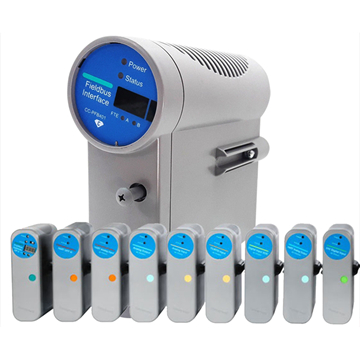
Its hardware system is also excellent, with a single monitoring device capable of simultaneously tracking 128 measurement points, building a complete electrical topology monitoring network from high-voltage switchgear, transformers to cable terminals, and bus ducts, achieving 7 × 24-hour uninterrupted protection.
3、 Practical experience in seven major fields: the implementation of the value of predictive operations and maintenance
1. Data Center: Ensuring the 'heartbeat' of the digital economy
Modern data centers have extremely strict requirements for power availability. A top North American cloud computing service provider deployed an IPEC system in its core data center, and through trend analysis, the system issued an early warning of early deterioration of winding insulation inside a critical 2MVA transformer six months in advance. If this hazard develops into a malfunction, it will result in at least 8 hours of downtime and an estimated direct business loss of over 3 million US dollars. The system also identified design flaws in a batch of harmonic filters through discharge characteristic analysis, and guided optimization to reduce overall energy consumption by 2.3%.
2. Medical health: "zero mistakes" to safeguard the lifeline
In the medical field, power supply safety is directly related to life. A large comprehensive hospital in the UK integrates the IPEC system with its building information model. When the system detects abnormal discharge signals in the distribution cabinet of the obstetrics surgical layer, the operation and maintenance personnel can directly locate the fault point in a specific cable joint in the 3D digital twin model, reducing the average fault diagnosis and repair time from 4 hours to 45 minutes, eliminating risks without affecting clinical operations.
3. Transportation hub: weaving a "protective net" for public safety
London Heathrow Airport is one of the busiest aviation hubs in the world. After deploying the intelligent monitoring system, the system successfully captured the intermittent discharge of the inverter output cable terminal of the rooftop photovoltaic power generation system in Terminal 5. After inspection, it was found that the insulation was slightly damaged due to installation stress. Below this location is a busy apron, and if the malfunction develops into an arc flash during thunderstorms, the consequences would be unimaginable. Early disposal avoids significant security risks and operational interruptions.
4. Intelligent manufacturing: bridging the "last mile" of Industry 4.0
In the industrial sector, unplanned shutdowns result in significant losses. A high-end German car manufacturer has deployed the system in its highly automated stamping workshop. Through continuous monitoring of the robot power distribution unit and long-distance variable frequency motor cables, the system successfully alerted multiple insulation hazards caused by mechanical vibration and pulse voltage reflection. After the implementation of the project, the unexpected downtime caused by electrical reasons in the workshop decreased sharply from 127 hours to 18 hours per year, and the overall equipment efficiency improved by nearly 10%. The investment return period was only 12 months.
5. New energy power stations: stabilizers to safeguard energy transformation
In a 100MW photovoltaic power station in Ningxia, IPEC's dedicated monitoring system on the DC side played a key role. The system issued a warning three months in advance, indicating that there was a surface discharge phenomenon at the DC cable terminal of a certain area's combiner box. After inspection, it was found that the micro wear of the connecting parts was caused by the temperature difference between day and night. Timely replacement avoids the potential risk of DC arc fire, which is usually difficult to extinguish and causes heavy losses in photovoltaic power plants.
6. Petrochemical industry: building a "firewall" for high-risk environments
In a large offshore natural gas platform in the Middle East, the harsh salt spray corrosion environment poses a continuous threat to electrical equipment. After deploying the online monitoring system, the platform achieved continuous health assessment of dense cable corridors and critical explosion-proof equipment joints. The system not only alerts for faults, but also automatically generates audit reports that comply with international standards (IEC 61850), helping the platform reduce electrical related safety incidents by 76% year-on-year, greatly meeting strict safety regulatory requirements.
7. Rail transit: the "guardian" that maintains urban arteries
A distributed monitoring network covering 34 kilometers of cables and traction power supply equipment has been established on the Beijing Metro New Airport Line. The system once captured the unique discharge characteristics of the auxiliary power input cable of a train, and after inspection and disassembly, it was confirmed that dendritic discharge traces had appeared inside the insulation layer. If this hidden danger occurs when the train is running at high speed with full load, it may cause the vehicle to lose power. Through early warning, "planned repair" has replaced "fault repair".
4、 Future outlook: Building a resilient and autonomous electrical ecosystem
ABB's acquisition aims to integrate IPEC's cutting-edge monitoring capabilities into its ABB Ability ™ Digital platform, building a complete closed loop from "monitoring" to "analysis decision execution". In the future, we may see:
•Edge intelligence: Implement millisecond level fault self diagnosis on the device side.
•Digital Twin: Integrating PD data with multi physics models to predict the remaining lifespan of devices.
•
Autonomous operation and maintenance: The AI platform automatically generates work orders and even schedules robots for maintenance.


 Videos
 News
News Applications








Leave Your Comment