Programmable Logic Controllers (PLCs) are the ruggedized computers at the heart of industrial automation. They translate digital logic into real-world process control. Selecting the correct PLC is a foundational decision that dictates the capability and reliability of an entire system.
Fundamental Engineering Needs: I/O Capacity and Signal Type Assessment
The selection process begins with a physical audit of all required control points. This is not a theoretical exercise; it is the project's foundation. A comprehensive "all signals document" must be created, mapping every sensor, switch, actuator, and motor the PLC must read or control. This input/output (I/O) list forms the absolute minimum requirement and is the basis for sizing the controller.
These I/O points are not all the same. They fall into distinct categories that define the system's complexity.
Digital vs. Analog Signals
Digital I/O modules handle simple, binary signals: ON or OFF. They represent discrete states, such as a proximity sensor detecting a box, a limit switch confirming a gate is closed, or an emergency stop button being pressed. Digital modules are straightforward and generally the most cost-effective.
Analog I/O modules, in contrast, handle continuous, variable signals. Instead of just ON or OFF, an analog signal provides a nuanced range, such as a 4-20mA current loop or a 0-10V signal. These signals are essential for any process that requires measurement. Examples include a thermocouple reporting temperature, a pressure transducer, or a flow meter measuring the rate of liquid. The selection of analog modules requires deeper consideration of the required resolution (the smallest change the module can detect) and its overall accuracy.
The ratio of digital-to-analog points in a project is a primary indicator of its overall complexity.
Specialized I/O and Strategic Spares
Beyond these two basic types, many applications demand specialized I/O modules. These are dedicated function modules that offload specific, intensive tasks from the main CPU. Common examples include high-speed counter (HSC) modules for precise positioning or event monitoring and motion control modules for coordinating complex robotics.
Finally, a universal best practice in control system design is to add a 20% to 25% margin for "spare" I/O points. This capacity is not just for future expansion. It provides a critical buffer for project scope creep and signals missed during the- initial specification phase. A user on one engineering forum noted, "After actually building it almost always that 25% has been completely consumed". Failing to add this buffer exposes the project to significant delays; a single missed sensor could require the purchase and integration of an entirely new, costly I/O card late in the project.
I/O Signal Type Assessment
| Signal Type |
Signal Nature |
Common Examples |
Key Selection Factor |
| Digital |
Binary (ON / OFF) |
Proximity sensors, pushbuttons, stack lights |
Number of points (density) |
| Analog |
Continuous / Variable |
Temperature, pressure, flow sensors (4-20mA, 0-10V) |
Resolution, accuracy, speed |
| Specialized |
Function-Specific |
High-Speed Counters (HSCs), Motion Control |
Compatibility, function |
Performance Determines the Upper Limit: CPU Processing Power and System Response Speed
A PLC’s performance is not measured in gigahertz like a desktop computer. Its performance is measured by its "scan time," the time it takes to react to the world.
The PLC Scan Cycle
A PLC operates in a relentless, continuous loop called the scan cycle. This cycle consists of three primary steps executed in order:
- Input Scan: The CPU freezes all inputs and reads the status of every connected sensor and switch.
- Program Execution: The CPU executes the user-created logic (e.g., Ladder Logic, Structured Text) from the first rung to the last.
- Output Update: The CPU writes the resulting decisions to the output modules, turning motors, valves, and lights on or off.
The total duration for one full loop is the scan time, typically measured in milliseconds (ms). A shorter scan time means a faster, more responsive system.
Program Complexity vs. Clock Speed
It is a common misconception that buying the fastest CPU guarantees high performance. Scan time is not determined by clock speed alone; it is primarily a function of program complexity. The more rungs of logic, complex mathematical calculations, and inefficient program structures, the longer the "Program Execution" step will take, thus lengthening the total scan time. A powerful CPU can be crippled by inefficient, monolithic code.
In high-speed applications like packaging, robotics, or motion control, a long or inconsistent scan time can be disastrous. A scan time that is too long "might miss critical events" or introduce "unsafe delays" for an emergency stop. This inconsistency, or "jitter," can also degrade product quality, such as causing uneven adhesive application on an assembly line. The CPU's upper limit determines the system's potential, but the actual performance is an engineering outcome.
Engineers can dramatically improve performance through smart programming. Breaking large programs into modular subroutines allows the PLC to skip executing code that is not currently needed. Another critical optimization is using integer math (whole numbers) wherever possible. Integer calculations can be 25-30% faster than floating-point math, which consumes more processing power.
Scan Time Optimization Techniques
| Performance Bottleneck |
Inefficient Method |
Optimized Method |
Rationale |
| Complex Calculations |
Heavy floating-point math |
Use Integers (whole numbers) where possible |
Integer math is 25-30% faster and uses less memory |
| Monolithic Logic |
Nested IF/THEN loops |
Streamlined logic with subroutines |
Subroutines allow the PLC to skip unused code sections |
| Redundant Logic |
Redundant loops or rungs |
Streamline code, remove unnecessary instructions |
Fewer instructions mean a shorter "Program Execution" step |
Communication and Integration: Protocol Compatibility and Interoperability
In modern manufacturing, a PLC does not operate in isolation. It acts as a crucial data hub, communicating "down" to field devices and "up" to supervisory systems. This hierarchy typically involves:
- PLCs executing real-time control.
- Human-Machine Interfaces (HMIs) providing a graphical display for operators to monitor and interact with a single machine.
- SCADA (Supervisory Control and Data Acquisition) systems, which are larger-scale platforms that monitor and control an entire plant or process.
This data exchange is governed by specialized industrial protocols, which are the "languages" of the factory floor. While hundreds exist, the three most common are Modbus, EtherNet/IP, and PROFINET. The choice of protocol is a foundational decision that often commits a facility to a specific vendor's ecosystem.
Comparison of Industrial Communication Protocols
| Protocol |
Developed / Supported |
Determinism |
Typical Use Case |
| Modbus (RTU/TCP) |
Modicon (Open) |
Low to Medium |
Simple device integration, legacy systems |
| EtherNet/IP |
Rockwell Automation (ODVA) |
High |
Real-time control and data-heavy applications |
| PROFINET |
Siemens (PROFIBUS & PROFINET Int'l) |
Very High (Deterministic) |
High-speed, synchronized motion control |
Integration and Cybersecurity Challenges
Simply connecting a PLC, HMI, and SCADA system does not guarantee success. Integration introduces significant challenges, particularly with tag database management. A "tag" is a data point, like a temperature reading or a motor status, that the SCADA system must poll from the PLC. In a large system with thousands of tags, poor planning can lead to slow HMI update speeds and a non-responsive system, even with a fast network.
This connectivity also introduces the single greatest risk in modern automation: cybersecurity. As factories embrace the Industrial Internet of Things (IIoT), they connect their operational technology (OT) networks to their information technology (IT) corporate networks. A PLC on the same "general pool of IP addresses" as the company email server is a massive vulnerability.
The primary defense is network segmentation. This architecture uses firewalls and a Demilitarized Zone (DMZ) to create secure, isolated sub-networks. The control system (OT) can pass data to the business system (IT), but an attacker who breaches the IT network is blocked from ever reaching the critical controllers.
Reliability Assurance: Power, Redundancy, and Environmental Durability Design
An automation system is judged on its uptime. Reliability is not a single feature but a multi-layered design philosophy, starting with the most fundamental component: power.
Foundational Power Stability
A PLC's reliability is fundamentally dependent on its power supply. Most PLCs require a stable 24V DC source. Industrial environments are electrically hostile, plagued by "dirty power"—voltage fluctuations, spikes, and electrical noise from heavy equipment. This "dirty power" can cause malfunctions, system shutdowns, memory corruption, or permanent damage to the PLC. In fact, a power supply failure is often more likely than a CPU failure.
A PLC's internal power supply offers limited protection. For critical applications, external protection is not optional. An industrial-grade Uninterruptible Power Supply (UPS) and power filtering are essential components. A high-availability UPS, such as those from Apter Power, provides two-fold protection: it continuously filters "dirty" electricity to provide a clean, stable 24V DC source, and it uses battery backup to bridge sags or blackouts, allowing the control system to continue operating or shut down gracefully.
High-Availability: Redundancy
For mission-critical applications in sectors like power generation or chemical processing, downtime is catastrophic. These systems use a "Hot Standby" redundant architecture. This setup involves two identical CPUs. One CPU acts as the "Primary" controller, actively running the process. The second "Standby" CPU is fully powered, monitors the primary, and is synchronized in real-time.
The magic of this system is the "bumpless switchover". The primary CPU transfers its entire memory—all variables, timers, counters, and I/O status—to the standby CPU on every single scan cycle via a high-speed link. If the primary CPU fails for any reason, the standby CPU takes control in the very next scan. Because its data is identical to the primary's at the moment of failure, the process continues without any interruption, hiccup, or "bump."
Physical Hardening
PLCs are "ruggedized" industrial computers designed to survive environments that would destroy a normal PC. This durability is a holistic design.
Externally, PLCs are installed in enclosures rated using two main standards: NEMA (common in the US) and IEC (IP) (the global standard). A NEMA 4X rating, for example, indicates the enclosure is watertight, dust-tight, and corrosion-resistant.
Internally, the PLC itself is hardened. Circuit boards are often treated with a conformal coating—a thin polymer film applied directly to the electronics. This film is the primary defense against moisture, humidity, salt spray, and corrosive gases that might be present in the ambient air. This internal coating, combined with robust mechanical designs to resist shock and vibration, allows the PLC to function reliably for decades.
NEMA vs. IEC (IP) Enclosure Rating Equivalents
| NEMA Rating |
Equivalent IEC (IP) Rating |
Protection Description Summary |
| NEMA 1 |
IP21 |
General purpose, indoor, protects against falling dirt |
| NEMA 3R |
IP32 |
Weatherproof, outdoor, protects against rain and sleet |
| NEMA 4 / 4X |
IP66 |
Watertight, dust-tight / 4X adds corrosion resistance |
| NEMA 6 |
IP67 |
Submersible in water (temporary) |
| NEMA 12 / 13 |
IP65 |
Industrial use, indoor, protects against dust, dripping liquids, oil |
Long-Term Value: Software Ecosystem, Scalability, and Lifecycle
The final selection factors are strategic. They look beyond the immediate project and focus on the total cost of ownership (TCO) over the 20-year lifespan of the controller.
Scalability: Modular vs. Fixed PLC Architectures
One of the first strategic choices is the PLC's physical form factor.
- Fixed (or Compact) PLCs: These are all-in-one units where the CPU, power supply, and I/O are in a single, compact housing. They are cost-effective and simple for small, well-defined tasks. Their scalability is very limited.
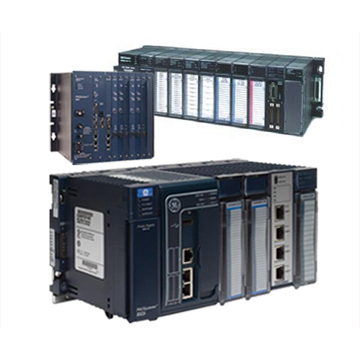
- Modular PLCs: These systems use a rack or backplane where separate modules for the CPU, power supply, and various I/O types can be added, removed, or swapped. This design is highly scalable, allowing a system to grow by simply adding more I/O cards. It also improves maintainability, as a single faulty module can be replaced without replacing the entire controller.
This choice is a business decision about the future of the process. A fixed PLC is a bet that the process will never change. A modular PLC is a plan for future growth and adaptation.
Modular vs. Fixed PLC Architecture Comparison
| Feature |
Modular PLC |
Fixed / Compact PLC |
| Scalability |
High: Add I/O and function modules as needed |
Limited: Fixed I/O count |
| Maintenance |
Easy: Swap individual faulty modules |
Difficult: Must replace the entire unit |
| Flexibility |
High: Mix and match I/O types |
Low: All-in-one fixed configuration |
| Initial Cost |
Higher |
Lower |
| Best For |
Complex, evolving, or large-scale systems |
Small, static, or standalone machines |
The Software Ecosystem and TCO
Choosing a PLC brand (e.g., Siemens, Allen-Bradley, Mitsubishi) is a long-term commitment. This is less about the hardware and more about the proprietary software ecosystem.
Each major vendor has its own programming environment (e.g., Siemens TIA Portal, Allen-Bradley Studio 5000). These platforms require significant investment in software licenses and, more importantly, in extensive employee training. This creates a high barrier to entry and a "walled garden" that leads to vendor lock-in.
The purchase price of the PLC is only a fraction of the total cost. The Total Cost of Ownership (TCO) includes all costs over the asset's lifecycle: software licenses, annual support fees, training, and ongoing maintenance.
Product Lifecycle and "Legacy" Risk
All hardware follows a predictable product lifecycle:
- Active: Actively produced and supported.
- Mature: No new development, support continues.
- End-of-Life (EOL): Production stops, support winds down.
- Obsolete/Legacy: No manufacturer support; relies on third-party repairs.
Running "legacy" PLCs past their EOL date is not "saving money"; it is a form of unmanaged, high-stakes operational and financial risk. When that PLC eventually fails, the operational risk is extreme downtime. One analysis calculated a 5-day wait for a rare part, with downtime costing $10,000/hour, would result in a $1.2 million loss. The financial risk is that parts scarcity drives costs up to 2-3x the original price. Finally, these systems are a severe security risk. A "legacy" controller is an unpatched controller, an ideal "attack surface" for cyber threats.
PLC Selection: Balancing Technical Requirements with Long-Term Valu
Selecting a PLC is a holistic process. It requires a balance of immediate I/O needs, processing speed, and network integration. The long-term value, dictated by the vendor's ecosystem, is just as critical as the system's foundational reliability. As this report details, running legacy or EOL systems creates significant downtime risks. To minimize this downtime and support your control systems, Apter Power specializes in supplying high-quality, rare, and discontinued automation spare parts.


 Videos
 News
News Applications





Leave Your Comment